 Texas homes often deal with various wildlife issues. Raccoons rummage through trash, while snakes might surprise homeowners in the yard. Squirrels can invade attics, causing damage, and bats pose health risks as nocturnal neighbors. Coyotes, adapting to urban areas,...
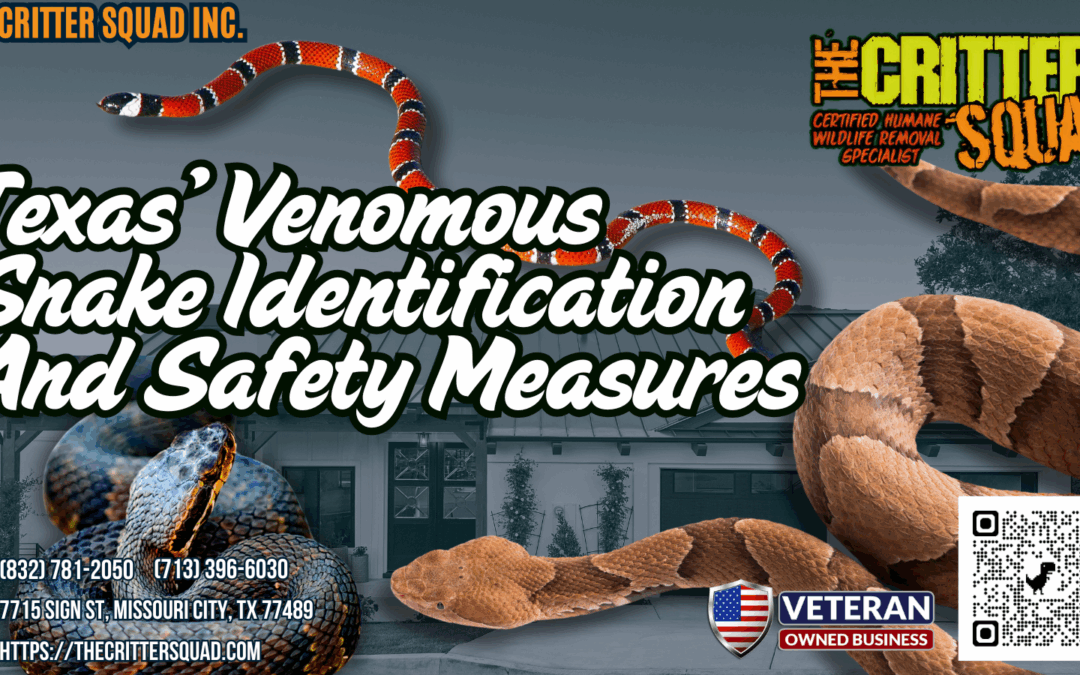 Texas has several venomous snakes, including the Western Diamondback Rattlesnake, Copperhead, and Coral Snake. Identifying them is important for safety. Key features include color patterns and head shape. To avoid encounters, keep your yard clean and hike on marked...
 When dealing with a bat infestation, calling a professional is often the best choice. Professionals know bat behavior and local laws, ensuring safe removal. Attempting DIY methods can be risky, as they may cause health problems or worsen the issue. There are legal...
 Texas homeowners can take several steps to prevent wildlife from invading their properties. They should assess their yards for attractants, secure garbage and compost bins with tight-fitting lids, and install barriers like fences. Regularly inspecting for and sealing...
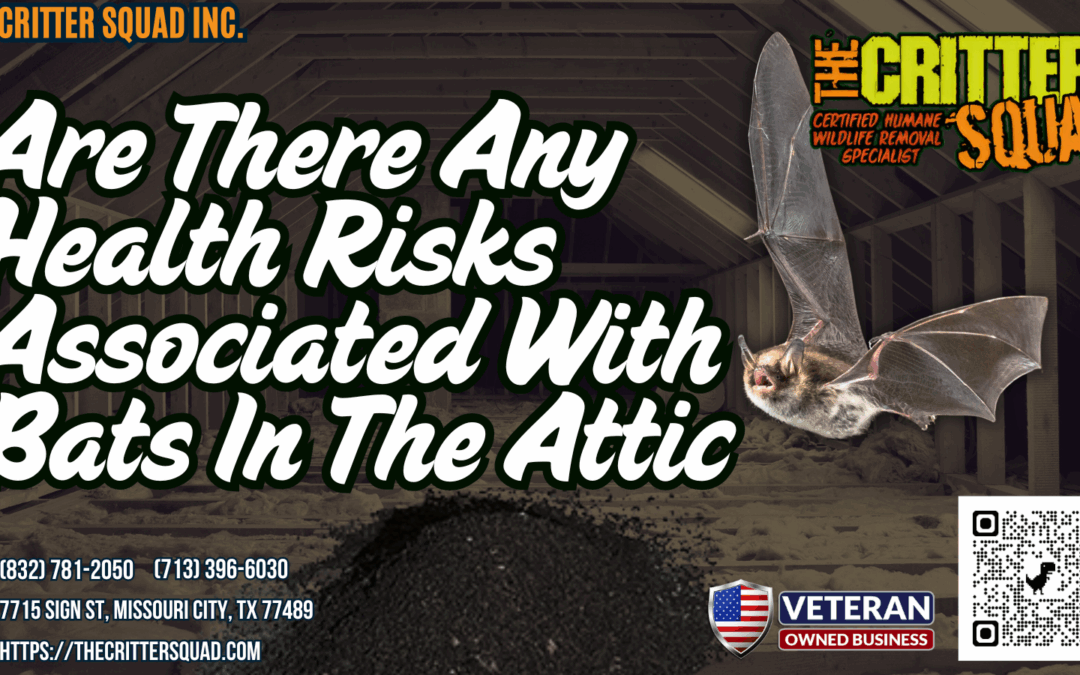 Bats in the attic can pose health risks. They may carry diseases like rabies, which can spread through bites or scratches. Additionally, bat droppings can create allergens that lead to respiratory issues, especially for sensitive individuals. Misconceptions exist...
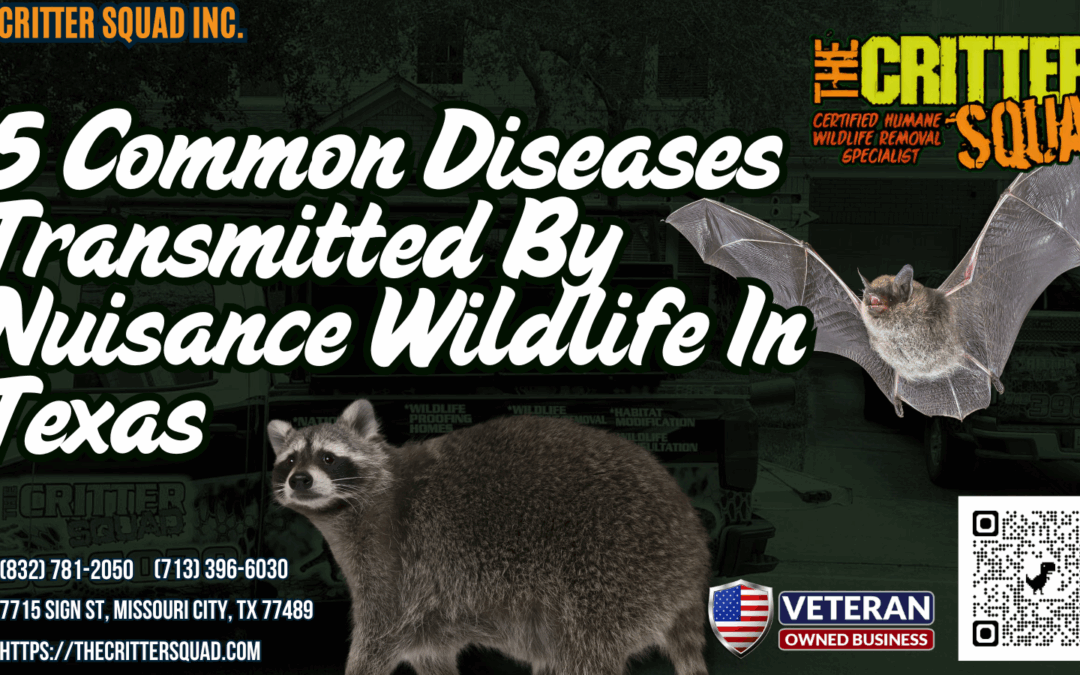 Nuisance wildlife in Texas can transmit serious diseases to humans. Common diseases include rabies, which causes aggression and confusion. Hantavirus, spread by rodents, leads to fever and difficulty breathing. Leptospirosis occurs through contaminated water and can...
 Wildlife control is often misunderstood as just trapping and removing animals, but that’s not the whole story. Many believe all methods are harmful, but professionals use humane techniques that promote coexistence. Relocation isn’t always safe for animals,...
 DIY wildlife control can lead to serious risks. Misinterpreting animal behavior may cause harm to both wildlife and humans. Additionally, there’s a health hazard from potential zoonotic diseases. Legal regulations often require permits, which many DIYers...
 Wildlife in Texas is a serious threat as carriers of rabies. Species like bats and foxes often transmit this virus to humans and pets. Infected animals may show signs of aggression or unusual calmness. Encounters with these animals can lead to bites, increasing the...
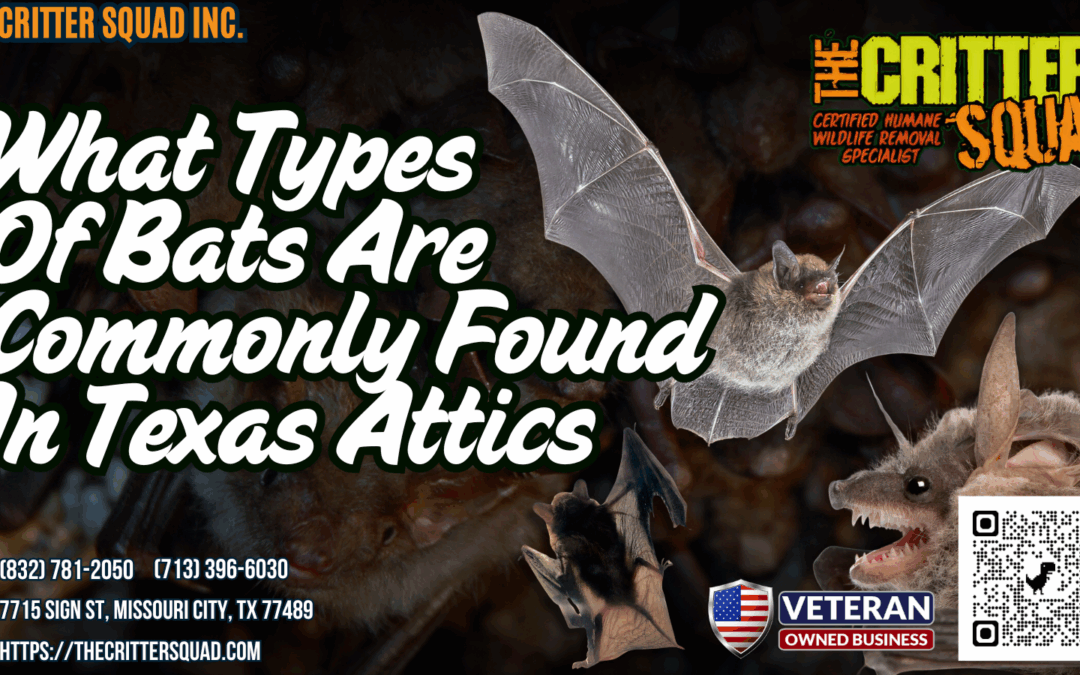 Common bat species found in Texas attics include Mexican Free-Tailed Bats, Big Brown Bats, and Little Brown Bats. Mexican Free-Tailed Bats prefer warm spots and form large colonies. Big Brown Bats roost in attics and consume various insects. Little Brown Bats are...